Step 1 of 12
Start with the sermon
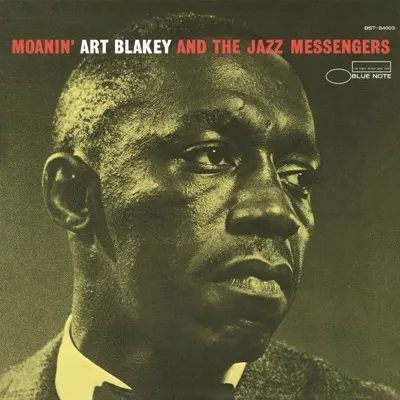
Moanin' Art Blakey And The Jazz Messengers · Blue Note BLP 4003 · 1958
Recorded on October 30, 1958, at Rudy Van Gelder's studio in Hackensack, this was Blakey's first album for Blue Note in several years, and it was a fresh start. The band was new: four young men from Philadelphia, Lee Morgan on trumpet, Benny Golson on tenor, Bobby Timmons on piano and Jymie Merritt on bass. It first came out under the band's name alone, but the opening tune caught on so quickly that the record has been called Moanin' ever since. It mixes church and blues feeling with modern jazz, and nearly every tune stayed in the band's book for years. That makes it the easiest door into Blakey's world.
Start with
- Moanin'
- Along Came Betty
- Blues March
"Moanin'" is built on call and response: the piano states a phrase and the horns answer, the way a gospel congregation answers. "Along Came Betty" is Golson's long, lyrical line, the nearest thing here to a ballad. "Blues March" borrows the feel of a New Orleans marching band, with Blakey keeping the march beat. Under all three, listen to how hard the drums push the soloists.
Open the record✓ Heard