Step 1 of 12
Start with the songbook
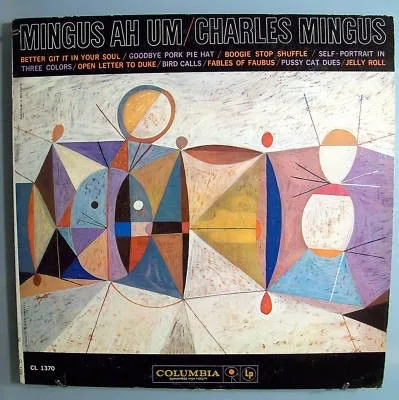
Mingus Ah Um Charles Mingus · Columbia CL 1370 · 1959
Start here. In May 1959 Mingus took eight players into Columbia's 30th Street Studio in New York for two days and came out with his first record for the label. Teo Macero produced it. The title is a joke on a Latin lesson, his name declined like an adjective. Many tunes are tributes to what made him: gospel church, Jelly Roll Morton, Duke Ellington, and Lester Young, who had died two months before. There is a protest song too, "Fables Of Faubus", aimed at the Arkansas governor who fought school integration in 1957. Columbia would not let him record the words, so it went down as an instrumental. It is the easiest way in.
Start with
- Better Git Hit In Your Soul
- Goodbye Pork Pie Hat
- Fables Of Faubus
"Better Git Hit In Your Soul" grew out of the gospel singing and preaching Mingus heard as a boy: listen for the church in it. "Goodbye Pork Pie Hat" is his slow elegy for Lester Young. In "Fables Of Faubus", hear the mocking theme and the sections where the band doubles the time. On "Jelly Roll", Horace Parlan slips a quote of Sonny Rollins's "Sonnymoon For Two" into his piano solo.
Open the record✓ Heard