Step 1 of 12
The other half of Blue Note
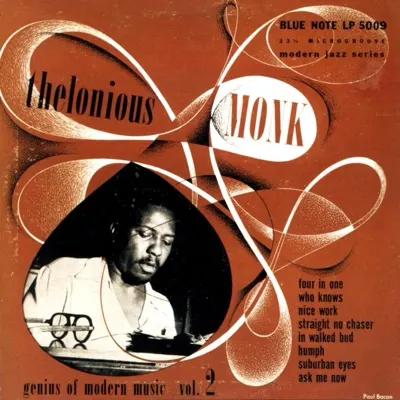
Genius of Modern Music Volume 2 Thelonious Monk · Blue Note BLP 1511 · 1956
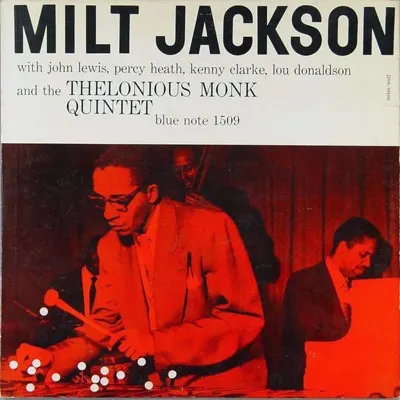
Everyone owns the first volume of Genius of Modern Music. The second, issued in 1956, holds the rest of the 1947 dates plus two later sessions: July 23, 1951, with Milt Jackson, Sahib Shihab, Al McKibbon and Art Blakey, and May 30, 1952, with Kenny Dorham, Lou Donaldson, Lucky Thompson, Nelson Boyd and Max Roach. The 1951 date came just weeks before Monk lost his cabaret card. This is where "Straight, No Chaser" and "Four in One" were first recorded. It shows a composer already sure of himself, with almost nobody listening yet.
Start with
- Straight No Chaser
- Four In One
- Carolina Moon
"Straight, No Chaser" is a blues built on one short phrase moved around the bar, and "Four in One" a twisting line for horns and vibes in unison. In "Carolina Moon", an old pop tune, Monk turns the beat into a 6/4 waltz; Ira Gitler, in the original notes, heard it as a way to get away from the usual jazz beat and still swing.
Open the record✓ Heard