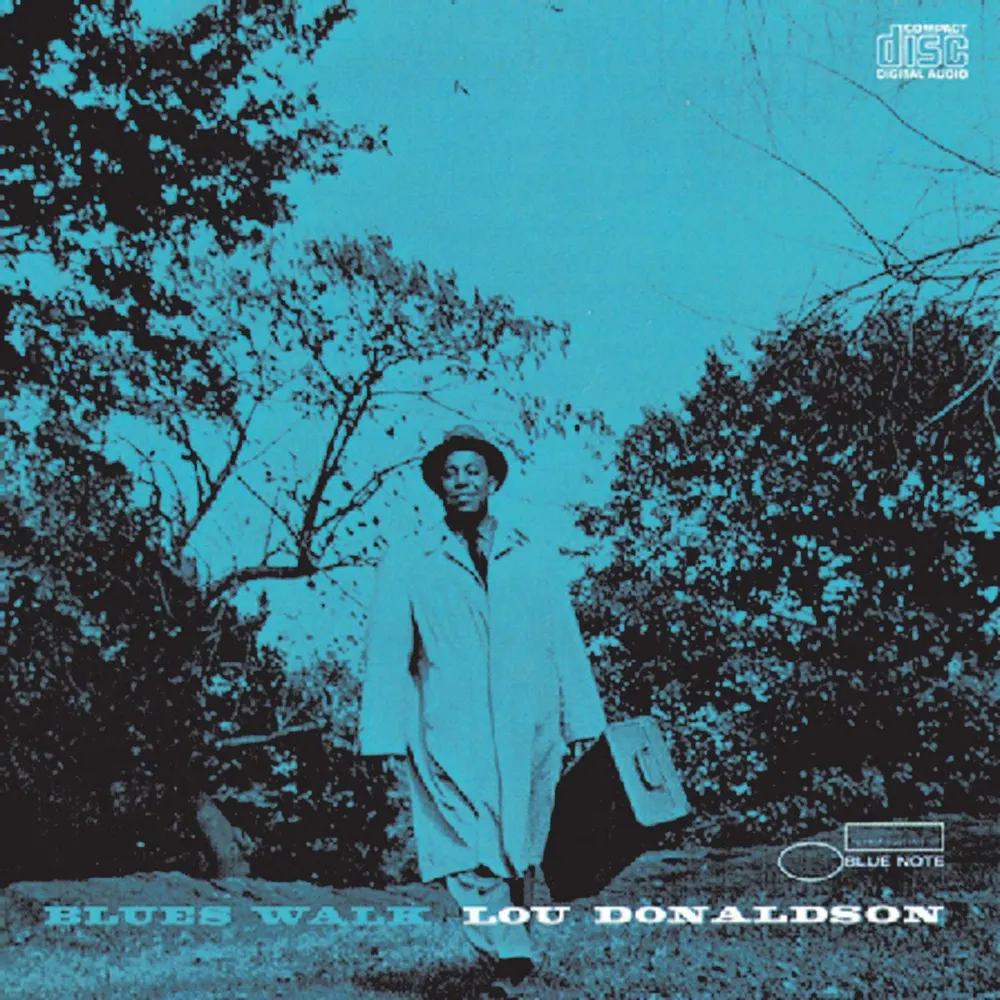
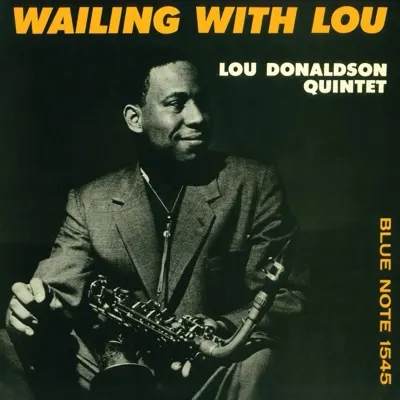
Lou Donaldson came mainly out of Charlie Parker, but Ira Gitler, in the original notes, says he had his own things to say in that style. Gitler also notes that Donaldson never toured much with his group and preferred to work in the East. He sums him up this way:
Lou just plays jazz in a straightforward manner without resorting to gimmicks.
Ira Gitler, original liner notes
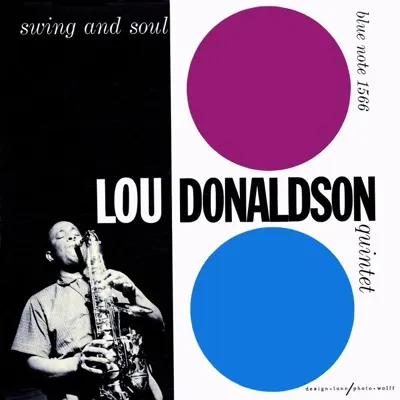
This was his second record with this band. The same five had made Swing and Soul in June 1957: Herman Foster on piano, Peck Morrison on bass, Dave Bailey on drums and Ray Barretto on conga. Foster was 30, blind, and a Philadelphian living in New York. Morrison came from Lancaster, Pennsylvania, and Bailey had spent most of the years since 1955 drumming for Gerry Mulligan. Barretto, born in New York in 1929, preferred playing jazz to working in Latin bands, and Gitler credits him with showing how the conga could fit in a jazz group.
The date was Monday, July 28, 1958, at Rudy Van Gelder's in Hackensack, with Alfred Lion producing. The take count ran to 15, and six tunes were kept, four of them on singles.
Side one opens with the title tune, a minor blues by Donaldson, which Gitler says starts everything rocking. Denzil Best's "Move" has Donaldson first and then Foster. "The Masquerade Is Over" is usually a ballad, but Donaldson swings it at a lilting tempo.
Side two starts with "Play Ray," with the conga out front.
Play Ray, a Donaldson blues whose melody is stated by Barretto
Ira Gitler, original liner notes
After Foster and Donaldson, Morrison walks two choruses. "Autumn Nocturne" is the ballad, which Gitler calls tender and sweet but never sticky, with a bit of Erroll Garner in Foster's spot between Donaldson's two statements. Donaldson's riff tune "Callin' All Cats" closes the set, with room for Morrison, Barretto and Bailey too.
The photography is by Francis Wolff.
The reviews in early 1959 were mixed, from praise in Cashbox and Metronome to a shrug from the Washington Post. Roger Feather, in the Toronto Star, heard it this way:
Donaldson's economic, agile work is a constant pleasure on this beautifully relaxed album.
Roger Feather, Toronto Star, 1959
Opinion has risen since. AllMusic's Steve Huey rates it the best record Donaldson made. It was his last date in the 1500 series. Wikipedia lists Light-Foot as the album that came next.