Step 1 of 12
Long tracks, new faces, 1951
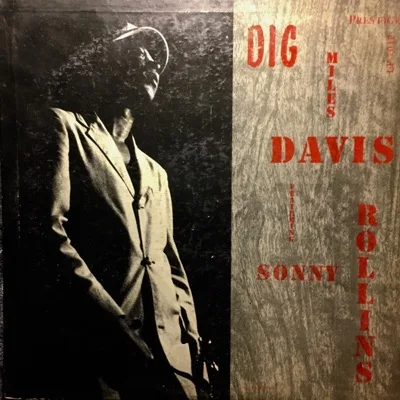
Dig Miles Davis Featuring Sonny Rollins · Prestige PRLP 7012 · 1956
On October 5, 1951, at Apex Studios in New York, Davis made one of his first sessions for Prestige, with Sonny Rollins on tenor, Jackie McLean on alto, Walter Bishop on piano, Tommy Potter on bass and Art Blakey on drums. It was his first chance to use the new long-playing record, and he stretched out the way he did in clubs, past the three-minute limit of the 78. Charlie Parker watched from the booth. It was McLean's first recording and one of Rollins's earliest. Davis was deep in his addiction then, but this session points straight at the hard bop he would help shape three years later.
Start with
- Dig
- It's Only A Paper Moon
- Bluing
"Dig" is fast, with the three horns on the theme and then long solos. Listen for McLean's alto: raw, eager, clearly in Parker's shadow, and by one account unnerved by Parker's presence in the booth. "It's Only a Paper Moon" is a pop song at a bright clip. "Bluing" is a slow blues close to ten minutes long, the kind of track a 78 could never have held.
Open the record✓ Heard