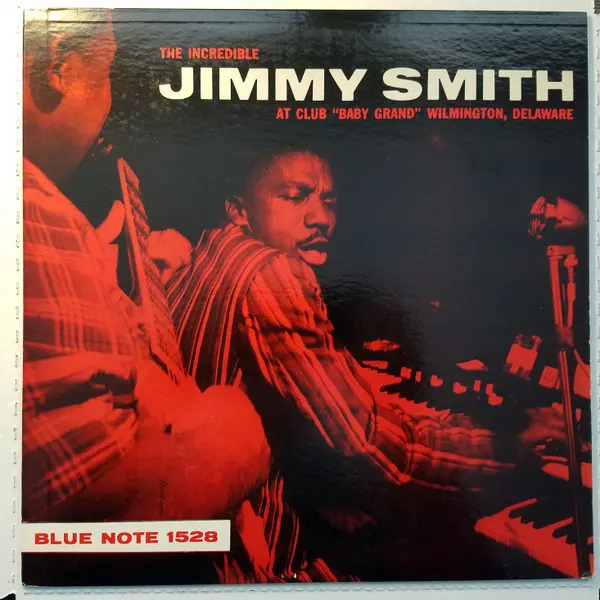
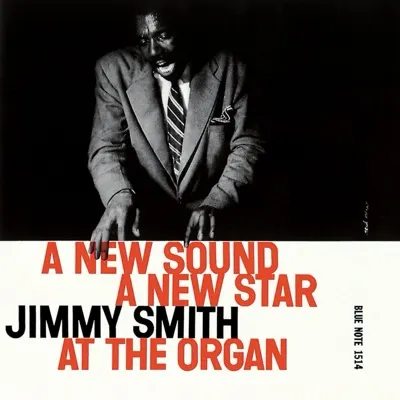
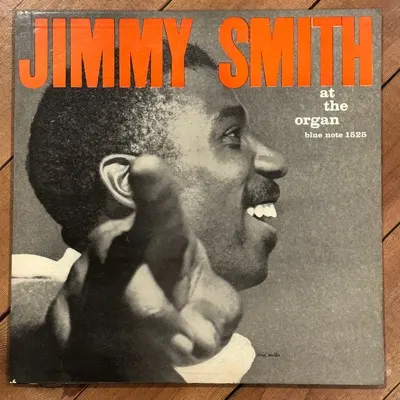
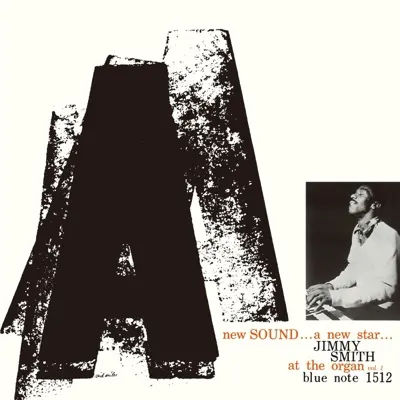
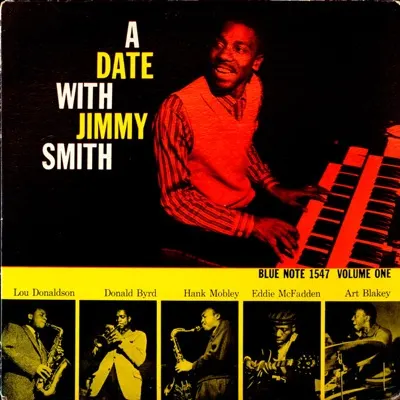
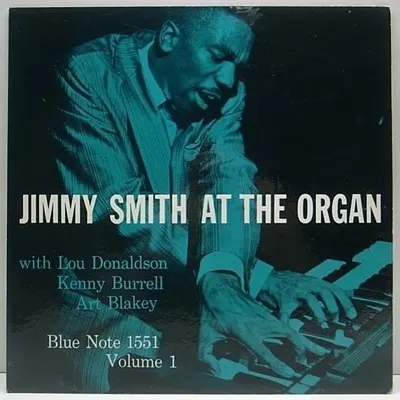
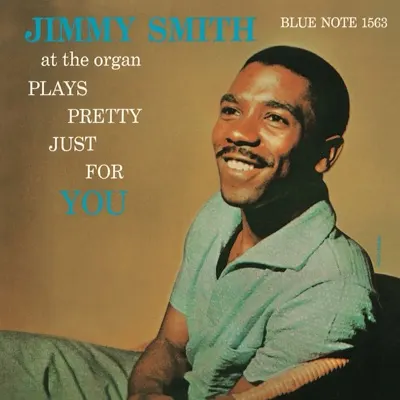
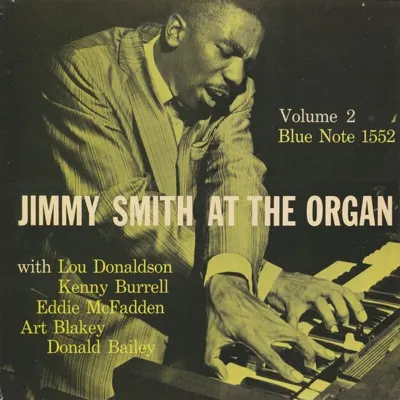
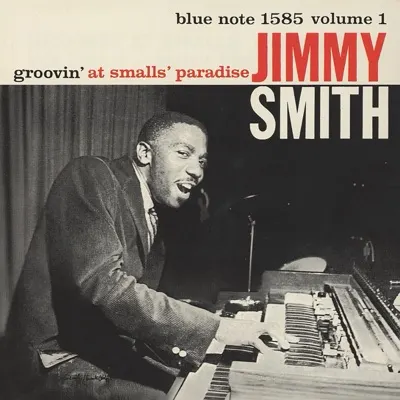
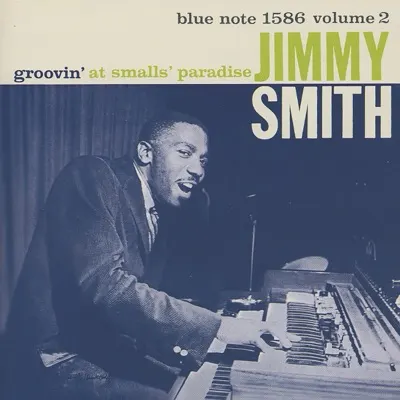
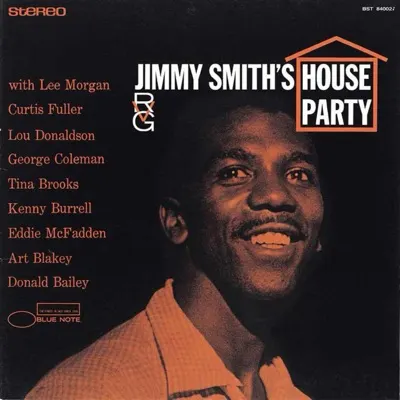
Jimmy Smith came from Norristown, Pennsylvania, just outside Philadelphia. He started on piano and moved to the Hammond organ for good in 1954. Alfred Lion heard him in a Philadelphia club and signed him, and by the summer of 1956 he had made a string of studio dates at Van Gelder's in Hackensack, released as A New Sound, A New Star and At the Organ. This was the first time Blue Note took the band out to a club.
The night was Saturday, August 4, 1956, at the Club Baby Grand in Wilmington, Delaware. Thornel Schwartz played guitar and Donald Bailey drums. Rudy Van Gelder ran the recording. The tapes caught four sets, one in the afternoon and three at night, and nine tracks were picked for two records. This is the first.
It opens with a voice. Mitch Thomas, a disc jockey on WILM, introduces the trio. Leonard Feather, in the original notes, says Thomas was a local champion of jazz and of Clifford Brown, and helped lead the Clifford Brown Memorial Fund. Feather found the room as outgoing as the band, and so did one listener:
He takes you right into church and then takes you outside for a walk!
a customer at the club, quoted in Leonard Feather's original liner notes
Side one is "Sweet Georgia Brown" and "Where or When." On the first, Feather counts something like 40 fast choruses from Smith. "Where or When" is slower, though organ and drums keep slipping into double time, and Schwartz takes a simpler solo. Dom Cerulli, reviewing the record in Down Beat, noticed the room too: the chatter between tunes, and a cash register before "Georgia Brown."
Side two opens with Horace Silver's "The Preacher." Smith had already cut it in the studio for A New Sound, A New Star; here it gains a funky riff up front, and Blue Note put it out on a 45 as "The New Preacher." "Rosetta" starts soft, with the guitar answering the organ. Feather hears Smith build it with octaves and full chords, leaning back on the beat the way Erroll Garner did, before Schwartz helps bring it down.
The sleeve was designed by Reid Miles, with photography by Francis Wolff.
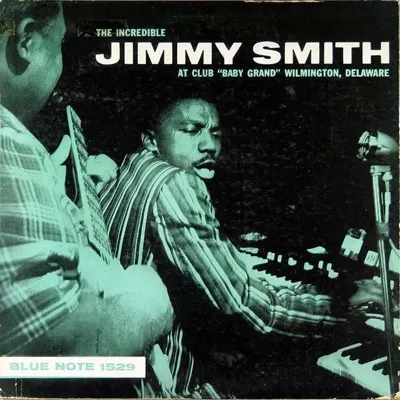
Cerulli gave the record three and a half stars. He wrote that Smith brought a fleet piano style to a slow-moving instrument, though he thought the organ's sound could wear on a listener over a whole record. The rest of the night went to Volume 2 (BLP 1529). Six months later Smith was back in Hackensack, making A Date with Jimmy Smith.