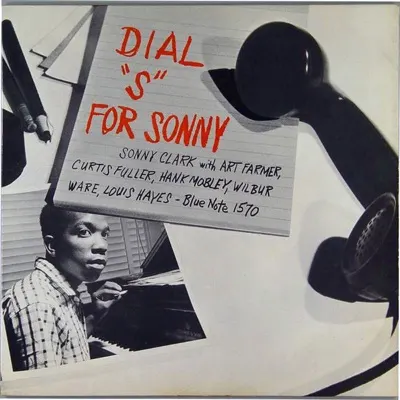
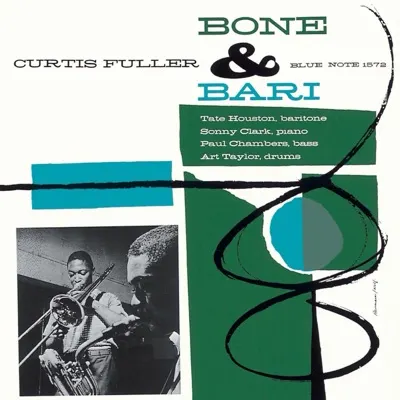
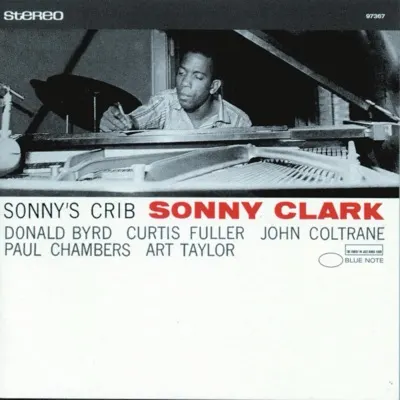
Curtis Fuller came to New York from Detroit in April 1957, and Blue Note kept him busy from the start. By December he had led The Opener and Bone & Bari and played trombone on Cliff Jordan's record, on Sonny Clark's sextet date and on John Coltrane's Blue Train. Nat Hentoff, in the original notes, lets Fuller say what he was after.
I'm not interested in doing tricks with the instrument, in showing how high and fast I can play.
Curtis Fuller, in Nat Hentoff's original liner notes
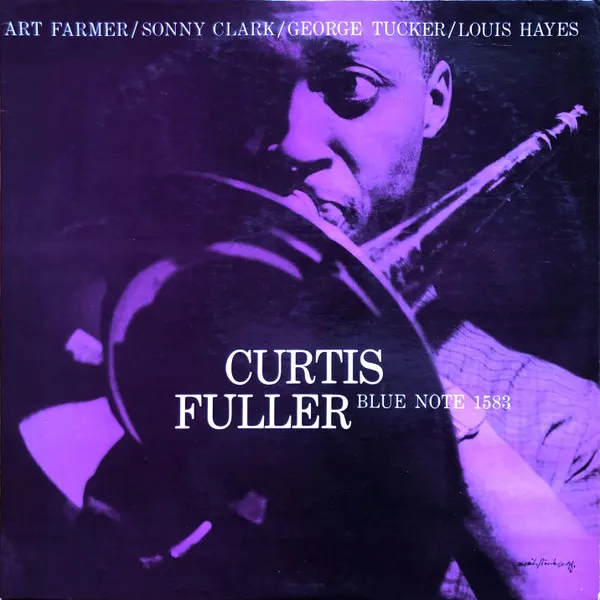
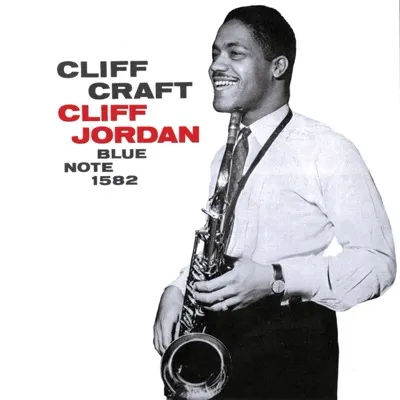
The date was Sunday, December 1, 1957, at Rudy Van Gelder's in Hackensack, with Alfred Lion producing. It was nearly the band from Cliff Jordan's Cliff Craft three weeks before, with Fuller in Jordan's place: Art Farmer on trumpet, Clark on piano, George Tucker on bass and Louis Hayes on drums. Hayes and Fuller had played in the same groups back in Detroit. Fuller told Hentoff that Clark could set the groove and throw you right in, and that Tucker was overlooked and could really swing. Six takes are listed, and all six made the record.
Fuller wrote five of the six tunes. Side one opens with "Little Messenger," which he meant to call up the feeling Art Blakey's Jazz Messengers once had. "Quantrale" has an Afro-Cuban tinge and was written with an alto player in mind, one Fuller had heard in a club; Hentoff does not name him. "Jeanie," Fuller says, is about someone he was fond of.
Side two starts with "Carvon," which grew out of a western film scored by Victor Young; the title plays on Young's name, and Tucker bows the introduction. "Two Quarters of a Mile" is for Miles Davis, and Fuller explained the title plainly.
The title means this is as much as I can get in conception from Miles. The rest has to be myself.
Curtis Fuller, in Nat Hentoff's original liner notes
The record closes with "Too Late Now," the Burton Lane and Alan Jay Lerner ballad, which Fuller chose because he liked it and had not heard many jazz players use it. Wikipedia lists it as "It's Too Late Now"; the session listing calls it "Too Late Now."
Francis Wolff is credited for photography.
Then the tapes sat. The record did not come out until December 1960, three years on, as Curtis Fuller Volume 3, his third as a leader for Blue Note. The reviews came in early 1961: Billboard heard real promise in him, and John S. Wilson in Down Beat gave it two stars.