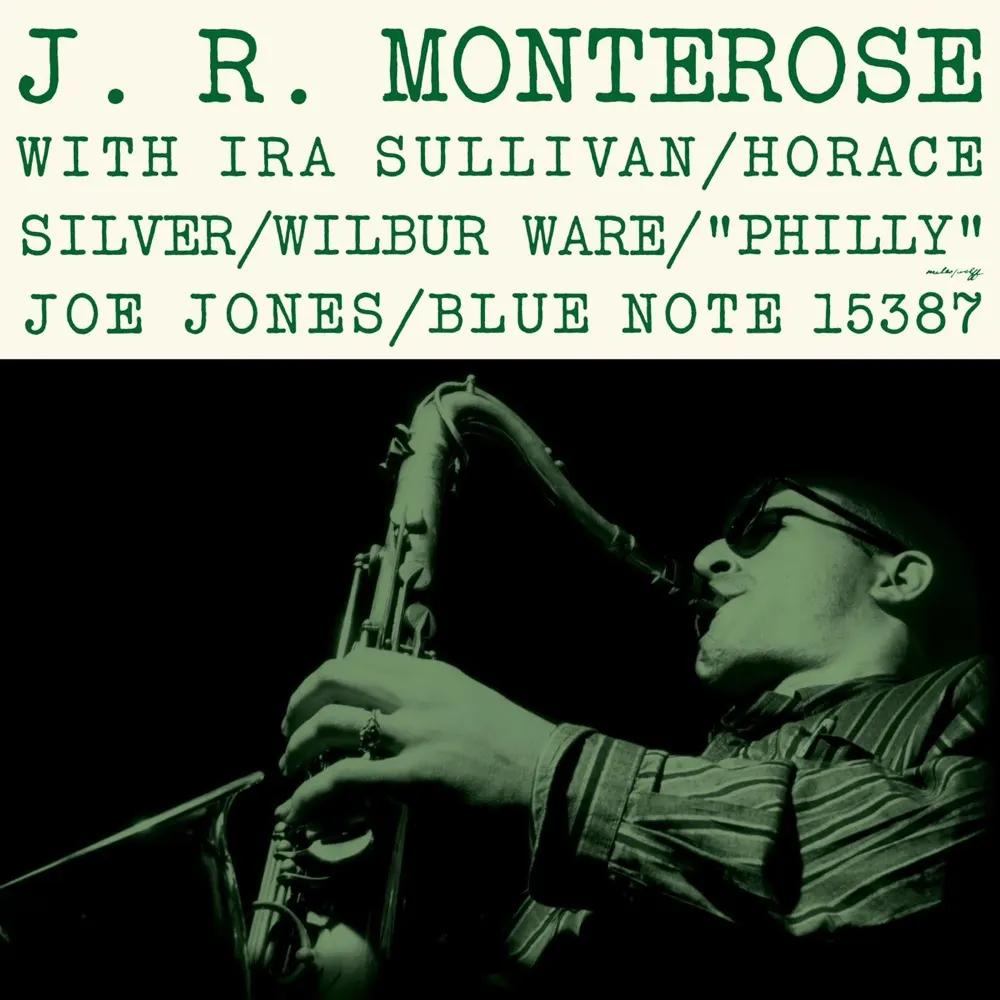
J.R. Monterose was born Frank Anthony Monterose Jr. in Detroit in 1927, and grew up in Utica, New York. The initials stand for "Junior." Leonard Feather, in the original notes, follows him through territory bands, a tour with Henry Busse's orchestra, six months in Buddy Rich's big band and a short spell with Claude Thornhill. Big bands left him too little room to solo, so he went back to small groups, among them Charles Mingus's. He was 29 when Alfred Lion offered him a record of his own, and he picked the band himself.
these are the exact men I had in mind who would be able to do exactly what I wanted.
J.R. Monterose, in Leonard Feather's original liner notes
The date was Sunday, October 21, 1956, at Van Gelder's in Hackensack. Ira Sullivan played trumpet; Feather says he could play virtually every instrument. Horace Silver played piano, Wilbur Ware bass and Philly Joe Jones drums. Jones and Monterose went back to the Buddy Rich band, where Jones had played second drums. Monterose worried that a whole program of his own tunes would be too much of him, so Silver brought in tunes by Donald Byrd and Paul Chambers, and Jones wrote one. Six tunes made the record. An earlier take of "Wee-Jay" waited for the CD.
Side one opens with "Wee-Jay," Monterose's line on the chords of "Out of Nowhere." He takes three choruses, then Sullivan, then Silver, and bass and drums trade fours before the theme comes back. Byrd's "The Third" is a 12-bar tune, and Feather hears Sonny Rollins in the tenor. "Bobbie Pin" is a cheerful one, with a bass chorus Feather thought almost like a guitar, and it fades out on a Latin rhythm.
Side two starts fast with "Marc V," which gives Jones a workout. His own "Ka-Link" is named, Feather guesses, for the cymbal beat that opens it, and Monterose plays a long string of 12-bar choruses on it. Chambers's "Beauteous" closes the record, a smooth unison theme with a Latin bridge.
Wikipedia credits the sleeve to Reid Miles, with photography by Francis Wolff.
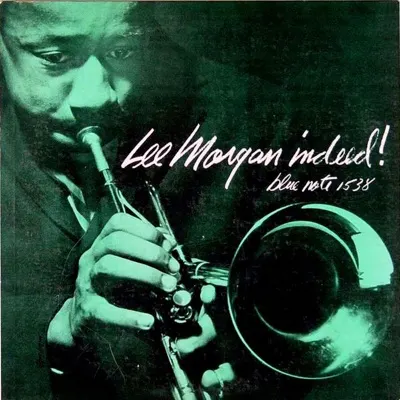
The session listing we follow has the record out in 1956; Wikipedia and The Jazz Tome give 1957. It was the only record Monterose led for Blue Note. Stephen Thomas Erlewine, at AllMusic, called it "one of the underappreciated gems in Blue Note's mid-'50s catalog." Two weeks later Silver, Ware and Jones were back at Van Gelder's, behind an 18-year-old Lee Morgan.