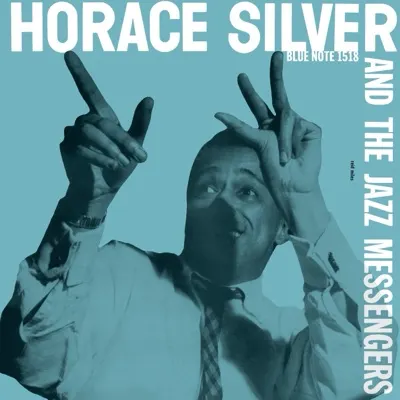
Horace Silver had spent most of the past two years in the Jazz Messengers. Born in Norwalk, Connecticut, in 1928, he was hired by Stan Getz after Getz heard him in Hartford, and then settled in New York with Art Blakey. When the first Messengers broke up in the summer of 1956, Silver took Hank Mobley, Donald Byrd and Doug Watkins with him and began working clubs under his own name. Leonard Feather, in the original notes, marks this as the first record by a permanent group of Silver's own.
Feather sketches the band. Mobley was from Georgia, raised in New Jersey. Byrd and Watkins were both from Detroit and had been at Cass Tech together. The drummer, Louis Hayes, was 18, also from Detroit, and had stepped in for Art Taylor on very short notice.
The date was Saturday, November 10, 1956, at Van Gelder's in Hackensack, with Alfred Lion producing. Seven tunes made the LP, and another take of "Senor Blues" was cut for a 45. "Shirl" and "For Heaven's Sake" are piano trio, without the horns.
Side one opens with "Cool Eyes," where the solos, by Mobley, Byrd and Silver, are joined by short unison passages for the horns. "Shirl," named for a young friend, is quiet and thoughtful. "Camouflage" has odd pauses in the rhythm behind the soloists, and "Enchantment" has an unusual Latin beat, with Hayes on mallets.
Side two opens with the one Feather liked best.
Senor Blues is, for this listener at least, the most exciting of the seven performances on these sides.
Leonard Feather, original liner notes
It is in a minor key and in triple time; Silver called it 6/8, and Feather heard 12/8. "Virgo" is named for Silver's birth sign, a fast tune where Hayes trades fours with the horns and takes a long solo.
Horace, on his solo here, is as fluent as a pianistic Charlie Parker.
Leonard Feather, original liner notes
The record ends with "For Heaven's Sake," a popular song of a few years before.
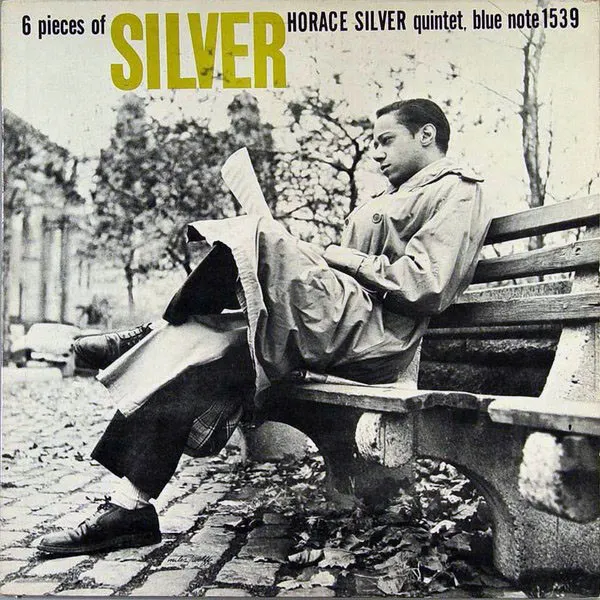
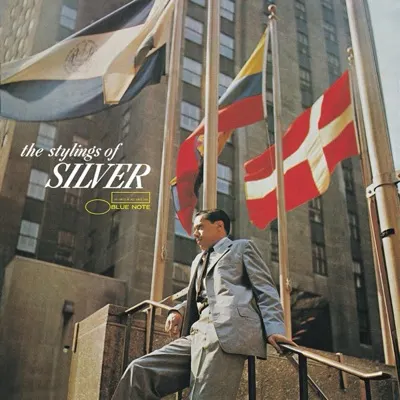
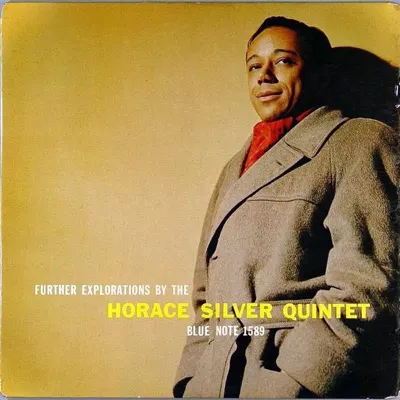
The sleeve is Reid Miles's design, with photography by Francis Wolff; Wikipedia says the cover picture was taken on Central Park West.
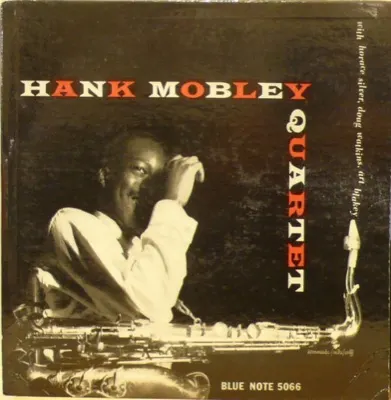
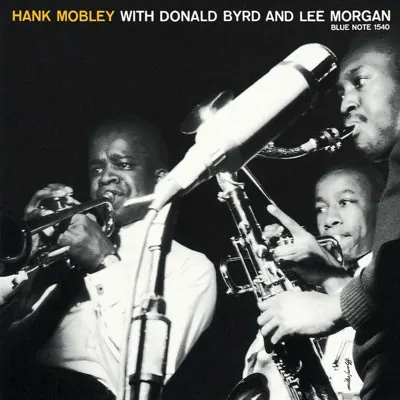
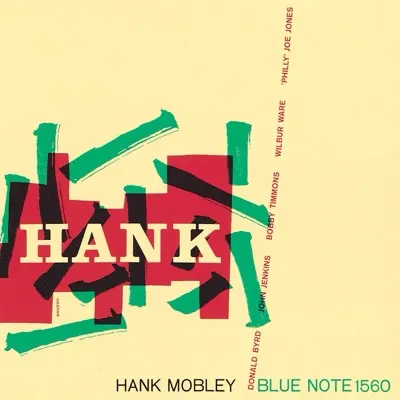
Scott Yanow, at AllMusic, wrote that "'Señor Blues' officially put Horace Silver on the map." Silver cut it again in 1958 with a vocal by Bill Henderson. Two weeks after this date Silver, Byrd and Mobley were back at Van Gelder's for Mobley's own record.