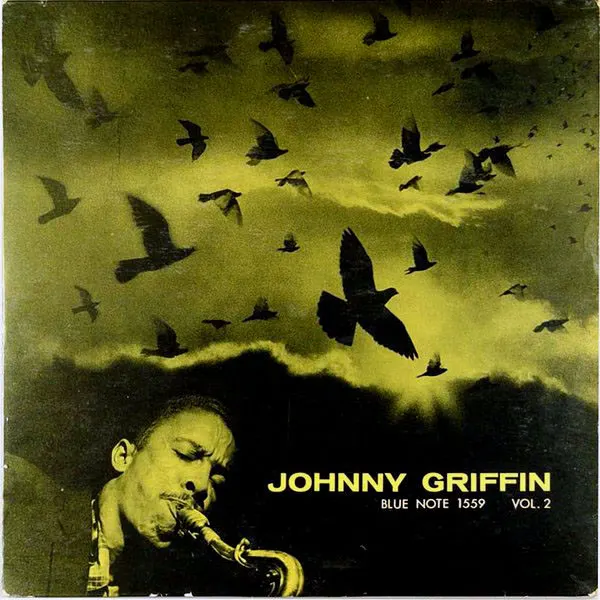
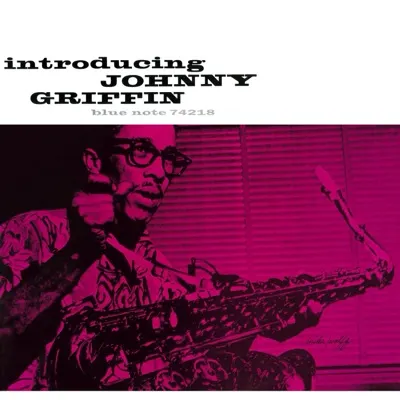
A year earlier Johnny Griffin had told Blue Note he would rather stay at home in Chicago. That was in the notes to his first record for the label, in 1956. Ira Gitler, in the original notes to this one, picks up the story: at Art Blakey's urging, Griffin had since joined the Jazz Messengers, and the band came to New York at a time when several of the best small groups were in town. The players were friends, word of the new tenor got round, and people wanted to play with him. This record is what came of it.
The date was Saturday, April 6, 1957, at Rudy Van Gelder's in Hackensack, with Alfred Lion producing. Wikipedia gives April 8; the Jazz Discography Project and The Jazz Tome both say April 6. Blakey was on drums, with Lee Morgan on trumpet, Wynton Kelly on piano and Paul Chambers on bass. And there were three tenors: Griffin, Hank Mobley, then with Horace Silver's quintet, and John Coltrane, whose time in the Miles Davis Quintet had made his name in 1956. Gitler sets them side by side. Mobley, he says, has a big, rounded sound and an even, logical way of building a solo. Of the other two:
Griffin is more extrovert in a raucous manner and his rapid fire delivery stamps him as one of "the fastest guns alive."
Ira Gitler, original liner notes
Coltrane is the most unconventional of the three with his vocal tone and very personal idea patterns.
Ira Gitler, original liner notes
Side one opens with Jerome Kern's "The Way You Look Tonight" at a breakneck tempo. Griffin plays the melody and three choruses, then Morgan, Mobley and Coltrane take theirs, and Griffin and Blakey trade before the theme comes back. On Griffin's "Ball Bearing" Coltrane goes first. Side two opens with another Kern tune, "All the Things You Are," with Chambers taking his first solos of the day. The record closes with Griffin's blues "Smoke Stack": Kelly plays it in, Mobley takes eight choruses and Coltrane seven.
The sleeve is Reid Miles's design, with photographs by Francis Wolff and Harold Feinstein.
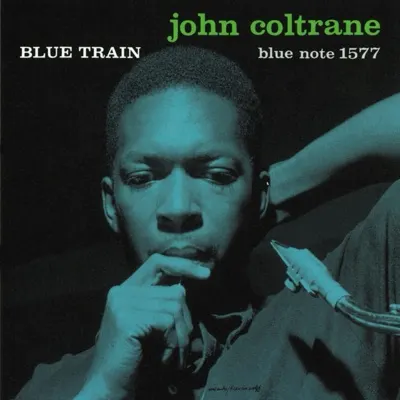
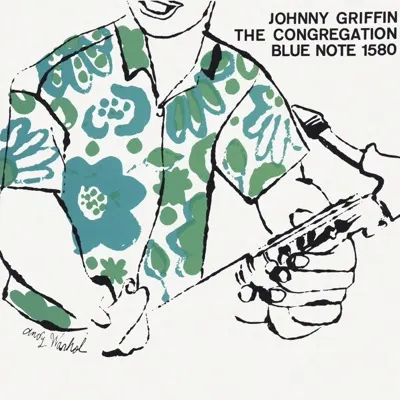
Five takes were made, and the first try at "Smoke Stack" waited for a CD in 1999. Ralph J. Gleason gave the record four stars in Down Beat. Coltrane was back at Van Gelder's for Blue Note that September, when he made Blue Train. Griffin came back in October with a quartet for The Congregation.